by Daisy Dao
Picture this: a dinner party guest walks into the kitchen, catches the aroma of something rich and spiced simmering on the stove, and asks, "Is that jambalaya or gumbo?" It happens to even experienced home cooks. Understanding the difference between jambalaya and gumbo goes well beyond identifying which dish uses more rice — it means grasping two distinct culinary philosophies rooted in centuries of Louisiana food culture. Both dishes belong to the heart of the Southern cooking tradition, yet they differ fundamentally in method, consistency, and the role rice plays in each.
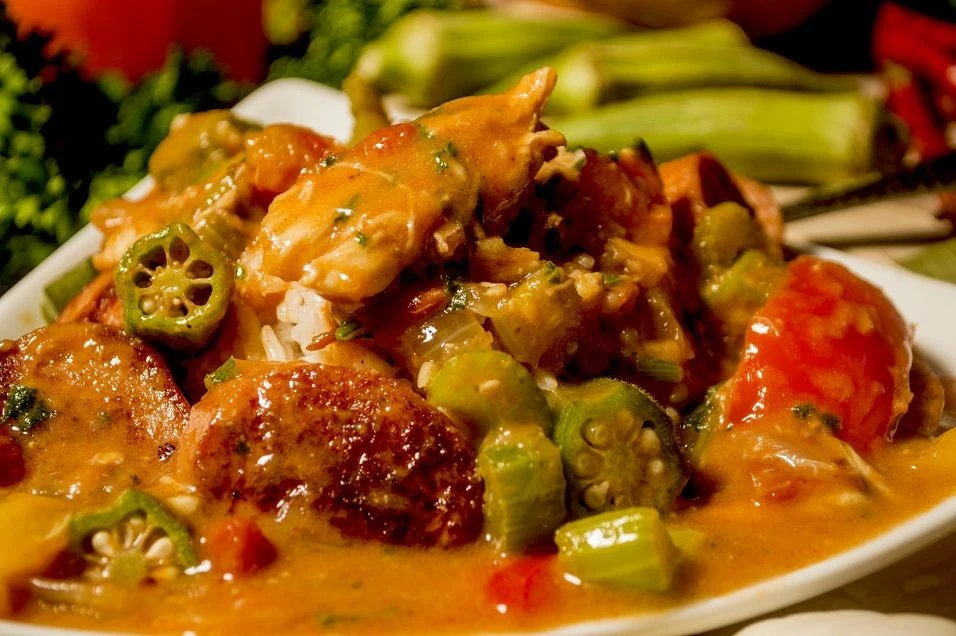
Jambalaya is a one-pot rice dish where raw rice, protein, vegetables, and broth cook together in the same vessel. The rice absorbs the seasoned liquid and takes on the flavor of everything around it, producing a thick, cohesive dish with a texture closer to a rice pilaf than a soup. Everything that makes jambalaya what it is happens inside that single pot — and the dish comes together in under an hour.
Gumbo is an entirely different undertaking. It is a rich, slow-simmered stew built on a dark roux — a painstakingly browned mixture of fat and flour that serves as the flavor backbone of the entire dish. The stew is ladled over separately cooked rice rather than incorporating it. The result is a deeply complex, intensely savory bowl that rewards patience and precise technique. This guide breaks down every significant difference so any home cook can approach either dish with full confidence.
Contents
To truly understand the difference between jambalaya and gumbo, it helps to know where each dish came from. Their distinct histories explain why they evolved as separate recipes with different cooking methods, even though they share the same geographic and cultural home. History is not just background here — it explains every key ingredient choice and technique still used today.
Jambalaya developed in the Louisiana bayou as a direct adaptation of Spanish paella, brought to the region by Spanish settlers in the 18th century. When saffron — the essential spice in paella — proved unavailable in Louisiana, cooks substituted tomatoes in the urban Creole version or simply leaned harder on browned meat in the rural Cajun version. French and West African culinary influences blended in over time, and the result became the layered, one-pot rice dish that defines Louisiana cooking.
Two distinct styles survive today:

Gumbo's origins are even more layered. Food historians trace gumbo to West African okra stews brought to Louisiana by enslaved Africans, blended with Choctaw tradition of using filé powder (ground sassafras leaves) as a thickener, and shaped by French techniques for building a rich roux. The word "gumbo" itself likely derives from "ki ngombo," the Bantu word for okra.
This convergence of African, Native American, and European culinary traditions makes gumbo one of the most culturally complex dishes in American cooking. It is a stew that rewards patience. A proper gumbo demands time, attention, and a genuine willingness to develop flavor in deliberate layers — there are no useful shortcuts.
For cooks who want a fast reference before committing to either recipe, a direct comparison captures the essential differences clearly. The table below covers every major variable.
| Feature | Jambalaya | Gumbo |
|---|---|---|
| Rice | Cooked inside the pot with all other ingredients | Cooked separately; served underneath the stew |
| Consistency | Thick and dry — similar to rice pilaf | Soupy, broth-based stew |
| Thickener | None — rice absorbs the liquid naturally | Dark roux, okra, or filé powder |
| Flavor Base | Holy trinity + tomatoes (Creole) or browned meat (Cajun) | Dark roux + holy trinity + stock |
| Common Proteins | Andouille sausage, shrimp, chicken | Crab, shrimp, chicken, andouille, oysters |
| Cooking Time | 45–60 minutes | 1.5–3+ hours |
| Difficulty Level | Beginner to intermediate | Intermediate to advanced |
| Flavor Profile | Bold, smoky, spiced, hearty | Rich, deep, complex, savory |
Despite their differences, jambalaya and gumbo share a common foundation that ties them to the same culinary tradition:

The most important technical distinctions between these two dishes come down to a few critical elements: what happens to the rice, whether a roux is built, and how liquid is managed throughout cooking. Getting clear on these differences is what separates a cook who makes either dish once and struggles from one who returns to both with confidence.
In jambalaya, raw rice goes directly into the pot with the meat, vegetables, and broth. As the dish cooks, the rice absorbs the seasoned liquid — soaking up the flavor of every ingredient surrounding it. The goal is a fully cooked, slightly sticky but never mushy pot where the grains have absorbed almost all the moisture. The liquid ratio is critical. Too much liquid produces a soggy, clumped result. Too little, and the rice scorches before it finishes cooking.
Pro tip: Long-grain white rice is the standard choice for jambalaya — it absorbs liquid cleanly and keeps grains distinct. Short-grain rice releases excess starch and turns the dish gluey.
In gumbo, rice plays a supporting role and is cooked entirely separately — usually plain steamed or boiled. It is served as a base that the thick, rich gumbo is ladled over. The two components remain distinct on the plate. The rice does not absorb the seasoning directly; instead, it provides a mild, neutral base that balances the intensity of the stew on top. Changing this dynamic — trying to cook the rice inside the gumbo — produces neither dish correctly.
The roux is the single most important element in gumbo and the primary reason it takes far longer to make than jambalaya. A traditional gumbo roux is made by cooking equal parts fat and flour together over low-to-medium heat, stirring constantly, for anywhere from 20 minutes to an hour — until the mixture darkens to a deep chocolate-brown color. This dark roux is the backbone of gumbo's entire flavor profile. It contributes nuttiness, body, and a depth of color that no shortcut can replicate. A roux burned past the point of no return ruins the pot — there is no recovery.
Jambalaya contains no roux. The bold flavor in jambalaya comes from deeply browning the proteins, cooking down the aromatics properly, and using a well-seasoned broth. This makes jambalaya considerably more forgiving for home cooks who are newer to this style of cooking. For anyone exploring how different flavor-building bases work in spiced dishes, the same principle that separates a roux from a broth base mirrors the distinction explored in curry paste vs curry powder — form and fat content change everything about how flavor develops.

Knowing the difference between jambalaya and gumbo pays off most when deciding which dish to cook for a specific occasion. Each has a clear use case where it outperforms the other. Choosing the wrong one for the wrong situation — like attempting a proper gumbo on a Tuesday night — is how home cooks end up frustrated.
Jambalaya scales effortlessly. Doubling the recipe and using a larger pot barely changes the cooking time. Because the rice cooks directly inside the pot, there is no need to manage a separate side dish — everything comes together at once. Jambalaya is the clear choice for:
For Creole-style jambalaya, tomato paste contributes body and color to the broth. When the pantry runs short, there are reliable tomato paste substitutes that preserve the dish's structure and depth without a last-minute grocery run.
Gumbo rewards the cook who treats a Saturday or Sunday as a cooking project. The flavor deepens significantly the longer it simmers — and improves even further after a night in the refrigerator. Gumbo is the right choice for:
For cooks building out a spice pantry to handle bold Cajun seasoning blends, a solid working knowledge of cumin substitutes and warm spice pairings translates directly to understanding the layered seasoning that drives both dishes forward.

Both jambalaya and gumbo are achievable for home cooks, but they demand different skill sets and different mental approaches. Understanding where each dish sits on the difficulty spectrum sets realistic expectations and leads to far better results on the first attempt — and every attempt after that.
Jambalaya is the friendlier entry point into Louisiana cooking. The method is essentially a structured one-pot sauté-and-simmer: brown the sausage, cook down the aromatics, add the protein, pour in broth, stir in rice, cover, and let the pot do the work. The main failure points are manageable with attention:
Most home cooks produce a solid jambalaya by the second or third attempt. The learning curve is gentle and the results are immediately rewarding. A heavy-bottomed Dutch oven or large cast-iron pot produces the best outcome because it distributes heat evenly and prevents scorching during the long rice-absorption phase. For cooks who enjoy building confidence with one-pot dishes before tackling something more complex, the approach used in a slow-cooker potato soup — layering ingredients and letting time do the work — develops the same patient instincts jambalaya rewards.
Gumbo demands focus at two critical junctures. The first is building the roux. A roux pushed past the correct color — from milk chocolate to dark chocolate to nearly black — adds bitter, acrid notes that ruin the entire pot and cannot be corrected. The second challenge is managing the thickener balance. The line between a gumbo that is perfectly thick and one that is gluey or thin comes down to technique and timing.
Practical guidance for first-time gumbo cooks:
Gumbo also benefits from a full day of rest. The flavors settle, deepen, and integrate in a way that freshly made gumbo simply cannot match. Cooking it the day before serving is not just acceptable — it is the preferred approach among serious home cooks.
The primary difference lies in how rice is used and whether a roux is involved. Jambalaya cooks raw rice directly in the pot alongside all other ingredients, producing a thick, cohesive dish. Gumbo is a broth-based stew built on a dark roux and served over separately cooked rice. The two dishes share similar proteins and aromatics but are fundamentally different in method and texture.
Gumbo is significantly more technically demanding. Building a proper dark roux requires constant attention, patience, and precise heat control — a burned roux cannot be salvaged and requires starting over. Jambalaya follows a more forgiving one-pot method that most home cooks can master with minimal prior experience. First-time Louisiana cooks are consistently better served starting with jambalaya.
Yes, both dishes commonly feature andouille sausage, shrimp, and chicken. Gumbo accommodates a broader range of proteins, particularly delicate seafood like crab legs, oysters, and crawfish, because the loose broth environment is more forgiving than the tight, rice-packed structure of jambalaya. Shellfish works better in gumbo than it does inside a jambalaya pot.
No. Authentic gumbo uses one of three thickeners: okra, filé powder (ground dried sassafras leaves), or a dark roux. Many traditional recipes combine two or all three, but none is strictly required. Some recipes rely entirely on the roux for body and omit okra and filé completely. The consistent defining element is the dark roux — not okra.
The holy trinity is the aromatic base of onion, celery, and green bell pepper used as the flavor foundation in most Louisiana dishes. It functions similarly to the French mirepoix — providing a savory, slightly sweet foundation that underlies both jambalaya and gumbo. It is always cooked down before any liquid is added to the pot.
Creole jambalaya includes tomatoes and is associated with New Orleans. It has a reddish color and a brighter, slightly acidic flavor. Cajun jambalaya omits tomatoes entirely and depends on deeply browned meat for its color and depth, producing a darker result often called "brown jambalaya." Both styles are considered fully authentic and each has devoted regional followings.
Gumbo improves substantially after resting overnight. The flavors meld and intensify in the refrigerator, making advance preparation not just acceptable but actively recommended. The rice should always be stored separately and combined just before serving — rice left sitting in gumbo absorbs the broth and turns soft and bloated by the next day.
A heavy-bottomed Dutch oven or enameled cast-iron pot is ideal for both dishes. Even heat distribution prevents burning during the roux stage in gumbo and during the rice-absorption phase in jambalaya. A wide, deep pot with a tight-fitting lid is the most practical and versatile choice for either recipe, and it is worth the investment for any serious home cook.
The difference between jambalaya and gumbo comes down to technique, time, and the role rice plays in each dish. Jambalaya is a bold, efficient one-pot meal built for weeknights and crowds. Gumbo is a slow-built, deeply complex stew built for cooks who want to invest real time in real flavor. Both deserve a place in any serious home cook's rotation. Browse the full recipe collection to discover more Southern and Cajun-inspired dishes, find the right kitchen tools to make them properly, and start cooking with confidence today.
 |
 |
 |
 |

About Daisy Dao
Daisy Dao grew up in Honolulu, Hawaii, where coastal living and access to fresh local ingredients shaped her approach to home cooking from an early age. She has spent years experimenting with seafood preparation, healthy cooking methods, and ingredient substitutions — developing hands-on familiarity with a wide range of kitchen tools, techniques, and produce. At BuyKitchenStuff, she covers healthy recipes, cooking techniques, and ingredient substitution guides.
Check for FREE Gifts. Or get our Free Cookbooks right now.
Disable the Ad Block to reveal all the recipes. Once done that, click on any button below
|
|
|
|
