Kitchen Gadgets & Equipment Reviews ›
by Daisy Dao
Which candy thermometer actually delivers accurate readings when you're working with boiling sugar at 300°F? If you've scorched a batch of toffee or ended up with grainy fudge, you already know the answer matters. After digging into the top options available in 2026, the OXO Good Grips Glass Candy Thermometer consistently earns high praise for readability and ease of use — but depending on your setup, one of the other picks on this list might suit you better.
Candy making is all about precision. According to Wikipedia's guide to candy making, sugar syrup behaves very differently at each temperature stage — soft ball (235–240°F), firm ball (245–250°F), hard crack (300–310°F) — and hitting the wrong stage by even a few degrees can ruin an entire batch. That's why a reliable thermometer isn't just a convenience. It's essential. Whether you're making caramel, nougat, lollipops, or deep-frying at home, having the right tool saves time, ingredients, and frustration. If you enjoy melting chocolate for dipping or fondue-style desserts, pairing a good thermometer with the best fondue pot takes your results to the next level.

We've put together a thorough breakdown of seven of the most popular candy thermometers on Amazon in 2026. You'll find classic glass models, stainless steel analog designs, and digital thermometers with smart alert features. Each review covers what works, what doesn't, and who each thermometer is best suited for. Browse more kitchen tool reviews in our full product reviews section, and check out our guide to heat resistant cooking gloves — a smart companion when you're working with hot sugar or deep-fry oil.
Contents
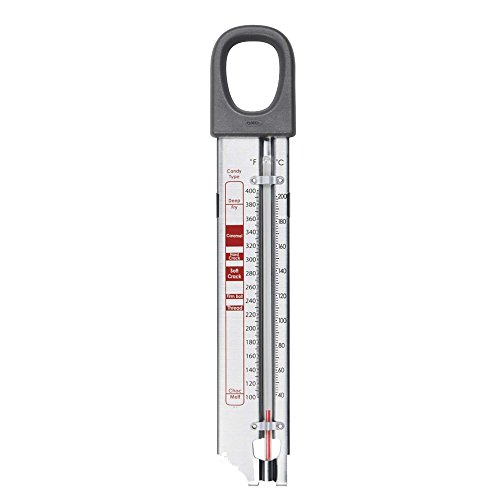




The OXO Good Grips Glass Candy Thermometer has earned a loyal following among home bakers and candy enthusiasts for one straightforward reason: it's incredibly easy to read. The glass tube is offset from the backing panel, which means the large temperature markings are right in your line of sight without you having to lean over a bubbling pot. Temperature zones for thread, soft ball, firm ball, hard ball, soft crack, hard crack, and deep fry are all printed clearly on the face — no squinting required.
The thermometer measures in both Fahrenheit and Celsius, with markings accurate to within two degrees. That level of precision matters a lot when you're working with sugar. The stainless steel frame is sturdy, and the pot clip holds the thermometer securely against the side of your pan. It's a straightforward, no-frills design that gets the job done without any complicated setup or battery changes. This is the thermometer you reach for when you want a reliable, proven tool that just works.
One thing to keep in mind: this is a glass thermometer, which means you'll want to handle it with some care. It's not designed to drop on hard tile or be thrown in a drawer. But if you treat it well, it should last for years of candy-making sessions. If you're new to candy making, this is an excellent first thermometer to build your skills with.
Pros:
Cons:
Taylor has been making thermometers for over 150 years, and the Taylor Stainless Steel Candy Thermometer shows exactly why the brand has lasted that long. This 12-inch analog paddle thermometer covers a temperature range of 100°F to 400°F, which covers everything from thread stage all the way through hard crack and deep-frying temperatures. The 8-inch face is printed with clearly marked candy stages so you always know where you stand in the cooking process.
The adjustable pot clip is one of this thermometer's standout features. It slides along the stem and locks in place securely on the side of your pot, which keeps the probe tip suspended in your syrup or oil without touching the bottom. Bottom contact throws off your readings, so this is a practical detail that actually affects accuracy. The stainless steel construction is durable and easy to wipe down after use.
For straightforward candy and frying tasks, this thermometer punches above its price point. It's a workhorse. You won't get digital precision or audio alerts, but if you prefer a traditional analog thermometer with a trusted brand behind it, the Taylor is hard to beat. It's especially popular with home bakers who make candy regularly and want something dependable without any fuss.
Pros:
Cons:
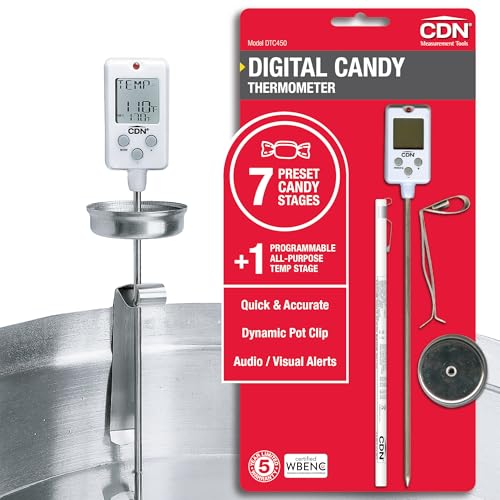
If you want a candy thermometer that does more than just display numbers, the CDN DTC450 is worth a serious look. This digital model comes with seven preset candy stages built right in — thread, soft ball, firm ball, hard ball, soft crack, hard crack, and deep fry — plus one programmable all-purpose stage you can set yourself. Instead of watching the display constantly, you just select your stage and let the thermometer alert you when you're getting close, when you've hit your target, and if you've gone too far. That's three separate alerts: pre-alert, target alert, and over-alert.
The 8.25-inch stainless steel stem is long enough to stay out of the heat while keeping the probe well-submerged in your syrup. The exclusive adjustable pot clip works at multiple angles, which is useful if you're working with different pot depths or using a bottle for jam or jelly making. Audio and visual alerts work together, so you'll know when to act even if you step away from the stove briefly.
The CDN DTC450 is a strong pick if you make candy frequently and want to reduce the mental load of monitoring temperature manually. The learning curve for setting stages is minimal, and once you've used it a few times, it becomes second nature. It's a step up in price from basic analog models, but the alert system pays for itself the first time it saves a batch of caramel.
Pros:
Cons:
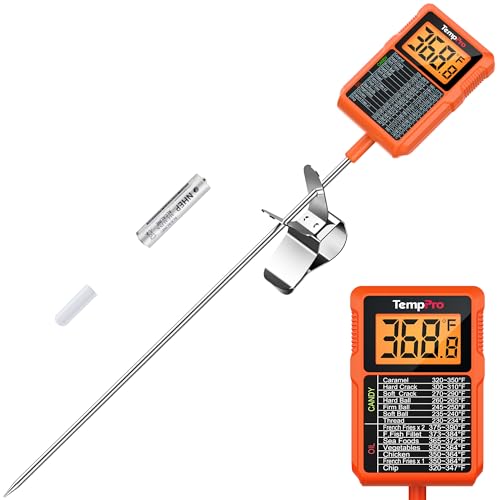
The TempPro TP510 (previously sold as ThermoPro) brings instant-read digital speed to candy and deep-fry work. With readings in 1–3 seconds and accuracy of ±0.9°F, you get one of the most responsive thermometers on this list. If you're someone who likes to spot-check temperature quickly rather than leaving a thermometer clipped to a pot the whole time, the TP510 gives you that flexibility. The 10-inch probe is long enough to keep your hand well away from hot oil or boiling sugar.
One of the standout practical features is the 90-degree rotating display. You can angle the screen toward yourself from almost any position around the pot, which is especially helpful when you're stirring and don't want to stop and reposition. The backlit display means you can read it clearly even in a dim kitchen. IPX5 waterproof rating means cleanup is simple — just rinse the probe under running water. No special handling required.
A pot clip is included, so you can use it as a leave-in thermometer as well as an instant-read. This dual-use flexibility makes the TP510 more versatile than most thermometers at its price point. Whether you're making hard candy, frying chicken, or checking the temperature of a sugar syrup mid-stir, the TP510 handles it smoothly. For bakers who also want something that doubles as a meat thermometer, this one earns extra value.
Pros:
Cons:
Wilton is a name most home bakers and candy makers know well, and the Wilton Candy Thermometer lives up to the brand's reputation for practical, dependable kitchen tools. This 14.7-inch glass thermometer covers a range of 60°F to 400°F — a wider low-end range than most competitors, which makes it especially useful for tempering chocolate, making nougat, and working with fudge that starts at lower temperatures. The side clamp clips securely to your melter, double boiler, or pot, keeping the glass bulb in exactly the right position for consistent, accurate readings.
The glass bulb design is traditional and proven. There's nothing electronic to fail, no batteries to run out. You simply clip it on, watch the bulb rise, and read the scale on the side. The wider temperature range (starting at 60°F) gives you more flexibility if you're doing any chocolate tempering work, where precision in the lower ranges matters just as much as hitting hard crack temperatures.
This thermometer is a good fit if you do a lot of chocolate and confectionery work and want a simple glass tool without any digital complexity. The clamp design is sturdy and straightforward to use. One practical note: glass thermometers require a little patience — read them at eye level and don't jostle the pot while checking. If you pair your candy making with a reliable cooling rack for baking, you'll have the full setup for professional-looking results.
Pros:
Cons:
The Polder Candy Thermometer is a solid all-rounder that earns its place on this list through reliable performance and a thoughtfully designed display. The temperature guide is printed directly on the thermometer body, giving you a quick-reference chart for six temperature zones: thread, soft ball, hard ball, soft crack, hard crack, and deep fry. You don't need to memorize anything — the answers are right there on the unit while you cook.
Covering a range of 90°F to 400°F (30°C to 200°C) in both Fahrenheit and Celsius, the Polder handles candy, jam, jelly, syrup, yogurt, and deep frying with equal ease. The stainless steel body is rust-resistant and built to hold up through years of use. The pot clip secures the thermometer firmly to the side of your pan. At 12 inches, the stem length gives you a comfortable distance from heat without being unwieldy.
If you're someone who makes jams and jellies regularly alongside your candy work, the Polder's dual-language scale and comprehensive zone labels are especially practical. The build quality is straightforward and honest — no gimmicks, no fragile glass, just a well-made stainless steel thermometer that does its job. For cooks who want one thermometer that covers the full range of sweet cooking tasks, the Polder is a reliable choice that won't let you down.
Pros:
Cons:
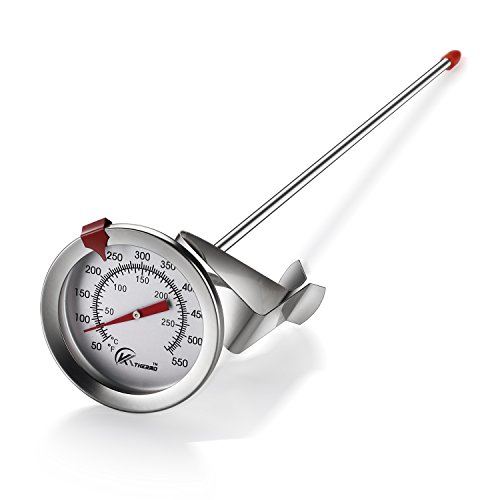
The KT THERMO Candy and Deep Fry Thermometer brings a seriously wide temperature range to the table: 50°F to 550°F. That's the broadest range on this list, and it means this thermometer isn't just for candy. You can use it for BBQ, grilling, turkey, and any high-heat cooking where other thermometers top out too soon. The 12-inch stainless steel stem is long and sturdy, giving you plenty of depth and heat clearance.
The dial display is analog and easy to read, with the key temperature zones marked clearly. Mechanical induction (no batteries needed) means you never have to worry about a dead battery ruining your batch. The stainless steel casing is compact, corrosion-resistant, and straightforward to clean. For cooks who want one thermometer that handles everything from candy to backyard grilling, this is a practical multi-purpose option.
The KT THERMO is a good value pick if you want a single tool that crosses cooking categories. It won't give you the candy-stage specificity of the CDN DTC450 or the readability of the OXO, but it covers a wider temperature band than almost anything else at this price. If you regularly cook across a variety of methods and want one workhorse thermometer to handle all of them, this is a smart pick.
Pros:
Cons:
Before you buy, it's worth thinking through how you actually use your kitchen and what kind of candy work you do most often. Here are the key factors that separate a great candy thermometer from one that ends up in the back of a drawer.
This is the first decision most buyers face, and it mostly comes down to personal preference and cooking style.
If you make candy regularly and want to reduce stress, a digital model with preset stages is hard to beat. If you prefer simplicity and tradition, a quality analog or glass thermometer is perfectly capable.
Not all thermometers cover the same range, and the difference matters more than you might think.
The probe needs to reach deep enough into your syrup without touching the bottom of the pot — because bottom contact gives you a false high reading that can ruin your candy stage. Most quality candy thermometers have stems between 8 and 12 inches, which works for standard pots. Look for an adjustable pot clip that holds the probe at the right depth without slipping. The Taylor and CDN both do this particularly well.
When you're stirring a pot of boiling sugar, the last thing you want to do is squint at a tiny display or misread the temperature. Consider these factors:
If you tend to multitask while cooking, alert features are worth paying extra for. Missing a candy stage by just 10–15°F can mean the difference between soft caramel and a solid brick.
Most candy thermometers cover the following key stages: thread (230–235°F), soft ball (235–240°F), firm ball (245–250°F), hard ball (250–265°F), soft crack (270–290°F), hard crack (300–310°F), and deep fry (350–375°F). Each stage produces a different texture in sugar-based recipes, from silky caramel to brittle lollipops. Hitting the correct stage is essential — even a 5–10°F difference changes the final result significantly.
Analog thermometers (glass or dial) use traditional mechanical or liquid-column technology to display temperature. They require no batteries and have no electronics to malfunction. Digital thermometers display a numeric readout on a screen and typically respond faster, with greater precision. Some digital models also include preset candy stages and audio alerts. For beginners, analog models are simpler. For frequent candy makers, digital models with alerts reduce monitoring stress and help you avoid missing a critical temperature window.
Yes. All seven thermometers on this list are rated for deep-frying temperatures, which typically fall between 325°F and 375°F depending on what you're frying. Most candy thermometers max out at 400°F, which covers the full frying range for standard home use. The KT THERMO goes up to 550°F if you need headroom for very high-heat work. Just make sure your thermometer's pot clip keeps the probe suspended in the oil without touching the bottom of the pan, which would give you an inaccurate reading.
The most reliable home calibration method is the boiling water test. Bring a pot of water to a full boil and submerge your thermometer probe — not touching the bottom. At sea level, water boils at 212°F (100°C). If your thermometer reads differently, note the offset and adjust your candy stage targets accordingly. For example, if your thermometer reads 208°F in boiling water, it's running 4 degrees low, so you'd cook your hard crack stage to 304°F instead of 300°F. Altitude also affects boiling point — water boils at a lower temperature at higher elevations.
Start with temperature range — make sure it covers your typical recipes plus deep frying if needed. Look for clearly labeled candy stages printed on the thermometer itself so you don't have to memorize targets. Check probe length and pot clip quality — the probe must stay off the bottom of your pot. If you multitask while cooking, consider a digital model with alert features. Finally, think about durability: stainless steel models hold up better than glass over time, but glass models offer a clear view of the liquid column and require no batteries.
Each has genuine advantages. Glass thermometers — like the OXO and Wilton on this list — offer a direct, unambiguous view of the temperature reading and need no batteries. They're traditional, proven tools. The trade-off is fragility: glass breaks if dropped or handled roughly. Stainless steel thermometers are more durable and resistant to damage. Models like the Taylor, Polder, and KT THERMO are built to last through years of use without worrying about breakage. For a high-traffic kitchen or a home with kids around, stainless steel is usually the more practical choice.
 |
 |
 |
 |

About Daisy Dao
Daisy Dao grew up in Honolulu, Hawaii, where coastal living and access to fresh local ingredients shaped her approach to home cooking from an early age. She has spent years experimenting with seafood preparation, healthy cooking methods, and ingredient substitutions — developing hands-on familiarity with a wide range of kitchen tools, techniques, and produce. At BuyKitchenStuff, she covers healthy recipes, cooking techniques, and ingredient substitution guides.
