by Daisy Dao
Ever wondered why brownies come out dry or unevenly cooked in a convection oven? The answer usually comes down to two simple adjustments: temperature and timing. Baking brownies in a convection oven is actually one of the easiest ways to get a perfectly even batch — once most people understand how circulating hot air changes the game. Our team has tested dozens of brownie recipes across multiple convection models, and the results are consistently better than traditional baking when the right tweaks are made. Whether someone is working from a box mix or a from-scratch recipe, the principles stay the same. For anyone exploring more kitchen projects, our recipes collection is a great starting point.

Convection ovens use a fan to circulate heated air around food, which means everything cooks more evenly and usually faster. That's great for roasting vegetables or crisping up chicken skin, but it can trip people up with delicate baked goods like brownies. The moving air can dry out the top, create uneven rising, or overbake edges before the center sets. Our team has found that a few small changes make all the difference between a disappointing batch and the fudgiest brownies imaginable.
This guide covers everything from step-by-step instructions to long-term strategies for consistent results. We'll also look at the pros and cons of convection baking for brownies and share quick fixes that anyone can apply today.
Contents
Before diving into the how-to, it helps to understand the science behind convection baking. A conventional oven relies on radiant heat from the top and bottom elements, creating hot and cool spots inside the cavity. A convection oven adds a fan (and sometimes an extra heating element) that circulates air throughout the space.
The fan inside a convection oven does a few things simultaneously:
For brownies, that faster and more even heat transfer is both a blessing and a potential pitfall. The edges won't overbake while the center stays raw — a common frustration with conventional ovens. But the drier air and faster cooking can lead to a cakier, less fudgy texture if the recipe isn't adjusted.
Brownies depend on moisture for that dense, fudgy texture most people love. The circulating air in a convection oven pulls moisture from the batter's surface faster than a standard oven. Our team has observed that this is most noticeable with thinner batches spread across large pans. The key takeaway: moisture retention becomes the central challenge when baking brownies in convection oven setups.
A few ways to counteract moisture loss:
This section walks through the entire process. Our team has refined this approach over many batches, and it works for both box mixes and homemade recipes.
Pan material makes a real difference. Anyone who has struggled with burnt edges on non-stick pans knows that material and coating affect heat distribution. For brownies, a light-colored aluminum pan is our top recommendation.
The standard rule of thumb for convection baking is to reduce the temperature by 25°F (about 15°C) from what the recipe states. Here's a quick reference:
| Recipe Temperature | Convection Setting | Estimated Time (8×8 pan) | Estimated Time (9×13 pan) |
|---|---|---|---|
| 325°F (163°C) | 300°F (149°C) | 22–26 min | 18–22 min |
| 350°F (177°C) | 325°F (163°C) | 20–24 min | 16–20 min |
| 375°F (191°C) | 350°F (177°C) | 18–22 min | 14–18 min |
Some newer convection ovens automatically adjust the temperature when the convection setting is selected. It's worth checking the manual to see if the oven does this — otherwise, double-reducing the temp will result in underbaked brownies.
Pro tip: If the oven has both a "Convection Bake" and a "Convection Roast" mode, always choose Convection Bake for brownies. Convection Roast uses higher top heat, which can scorch the surface.
Checking brownies for doneness is where many people go wrong — not just in convection ovens, but in general. Here's our team's approach:
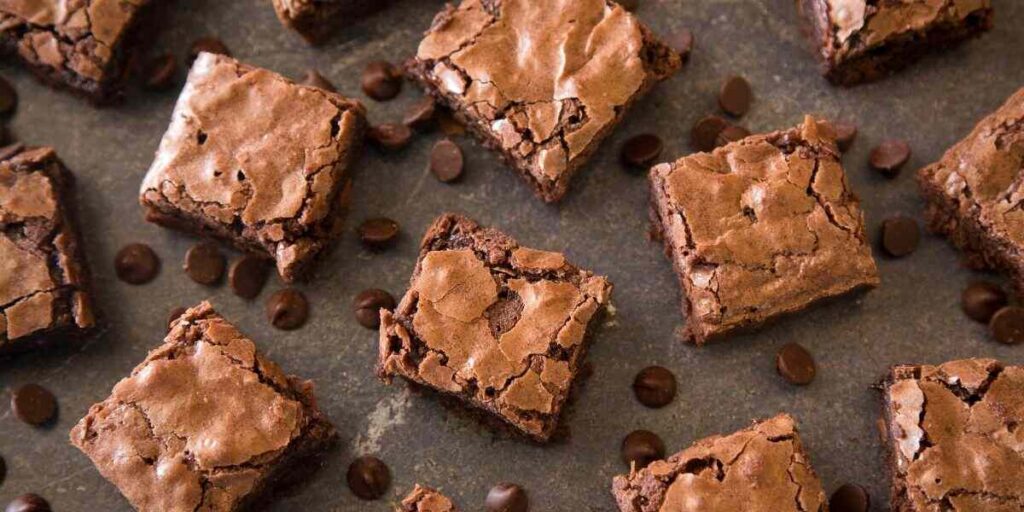
Is convection baking objectively better for brownies? It depends on what someone values most. Here's an honest breakdown based on our team's testing.
On balance, most home bakers find convection to be a clear upgrade for brownies once they've made the temperature and timing adjustments. The even heat alone is worth the small learning curve.
Getting one great batch of brownies is nice. Getting consistently great results every time takes a bit more intentionality. Here's how our team approaches it.
This might sound overly detailed, but a simple log transforms brownie baking from guesswork into a repeatable process. Our team records:
After three or four entries, clear patterns emerge. Maybe that particular oven runs hot and needs 300°F instead of 325°F. Maybe glass pans consistently need two extra minutes. These small details are easy to forget between baking sessions, which is why writing them down matters. The same kind of systematic approach helps with other oven projects, like making pizza at home in an oven.
Even with a convection fan, some ovens have slight hot spots. Our team's long-term strategy includes:
Over time, these habits become automatic. Most people who adopt this routine find their brownie results become remarkably consistent — batch after batch, same texture, same doneness.
Not everyone wants to keep a baking journal or overhaul their approach. Sometimes a few quick fixes are all that's needed. These adjustments require zero extra effort or equipment.
For anyone willing to modify the recipe slightly, these small changes can improve convection brownie results noticeably:
None of these tweaks require special ingredients or equipment. Most kitchens already have everything needed. The extra egg yolk and butter swap alone can transform a mediocre box mix into something that tastes homemade.
Yes. Most batches finish 3–5 minutes faster than in a conventional oven due to the circulating hot air. Our team recommends setting the timer for 5 minutes less than the recipe states and checking from there.
In most cases, reducing the temperature by 25°F (about 15°C) is the standard recommendation. Some convection ovens make this adjustment automatically, so checking the manual first is important.
Absolutely. Box mixes work well in convection ovens with the same temperature and timing adjustments. Adding an extra egg yolk or swapping water for milk can improve the texture even further.
The most common reasons are baking at too high a temperature or leaving them in too long. The circulating air removes surface moisture faster, so even an extra minute or two can push brownies from fudgy to dry.
While convection ovens are designed for even heat, rotating the pan 180° at the halfway point still helps. Our team has found it produces more consistent browning, especially in older or less expensive models.
Light-colored aluminum pans deliver the most consistent results. Dark non-stick pans absorb more heat and can lead to over-browned edges. Glass pans work but may need slightly longer bake times.
Yes, and this is one of the biggest advantages of convection baking. Place pans on different racks, staggered diagonally, so air circulates freely around each one. Add 1–2 minutes to the total bake time.
Insert a toothpick into the center. For fudgy brownies, it should come out with moist crumbs — not wet batter and not completely clean. The edges should pull slightly away from the pan, and the center should have a very slight jiggle.
Lower the temp, watch the clock, and trust the toothpick — convection ovens reward patience with the most evenly baked brownies a home kitchen can produce.
 |
 |
 |
 |

About Daisy Dao
Daisy Dao grew up in Honolulu, Hawaii, where coastal living and access to fresh local ingredients shaped her approach to home cooking from an early age. She has spent years experimenting with seafood preparation, healthy cooking methods, and ingredient substitutions — developing hands-on familiarity with a wide range of kitchen tools, techniques, and produce. At BuyKitchenStuff, she covers healthy recipes, cooking techniques, and ingredient substitution guides.
Check for FREE Gifts. Or get our Free Cookbooks right now.
Disable the Ad Block to reveal all the recipes. Once done that, click on any button below
|
|
|
|
