Kitchen Gadgets & Equipment Reviews ›
by Rick Goldman
Picture this: you're standing in the grocery store, zucchini in hand, dreaming of a lighter pasta dinner — but when you get home, your knife skills just aren't cutting it (pun intended). That's where a good zoodle maker changes everything. In 2026, these tools have gone from niche gadget to kitchen essential for anyone eating low-carb, gluten-free, or just trying to sneak more veggies onto the plate.
We've tested and reviewed the top options on the market, from compact handheld models to powerful tabletop spiralizers and even electric machines. Whether you're a casual zoodler or a serious meal-prepper cranking out veggie pasta every Sunday, there's a spiralizer on this list that fits your kitchen and your lifestyle. If you want an even broader look at what's out there, check out our roundup of the best vegetable spiralizers of 2026 — but right now, we're zeroing in on the top seven picks for zucchini specifically.
Choosing the right tool comes down to a few key questions: How often will you use it? Do you need multiple blade types? Do you want something that stores neatly in a drawer? We've broken it all down below so you can stop guessing and start spiralizing. Let's get into it.
Contents
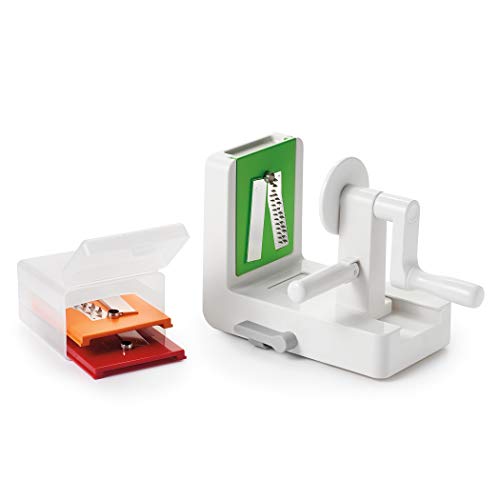


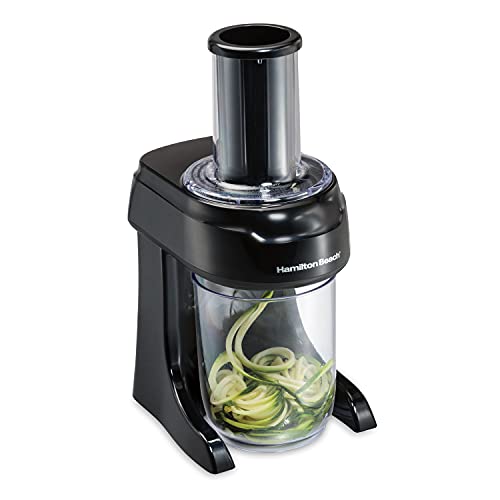
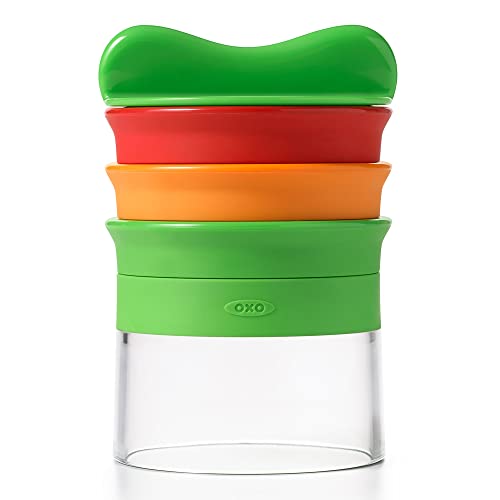


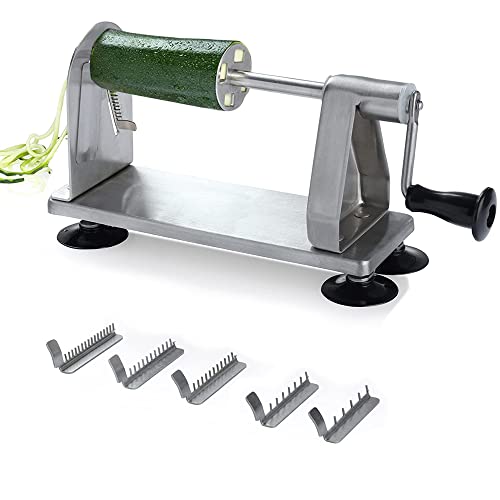
If you want one spiralizer that just works — every time, without fuss — the OXO Good Grips 3-Blade Tabletop Spiralizer is the one to get. OXO has built a well-deserved reputation for thoughtful kitchen tools, and this model is a prime example of that. The StrongHold suction base locks onto your countertop with a firm grip, so you're not chasing the machine around while cranking through a pound of zucchini. It stays exactly where you put it.
The three stainless steel blades cover the most-used cuts: spaghetti (1/8 inch), fettuccine (1/4 inch), and ribbon. That's honestly all you need for 90% of zoodle recipes. The blade swap is intuitive — no fumbling, no confusion. OXO also included a removable blade storage box that sits right on the unit, so you're never hunting through a drawer for that one missing blade. The food holder keeps your fingers safely away from the blades, which is a detail that matters once you've seen how sharp these things get.
Performance-wise, this spiralizer produces clean, uniform noodles with minimal crumbling or breakage. It handles zucchini, cucumbers, carrots, beets, and sweet potatoes with equal confidence. Cleanup is simple — rinse, or toss the parts in the top rack of your dishwasher. For everyday use in 2026, this is the benchmark that other tabletop spiralizers are measured against.
Pros:
Cons:
The Mueller Pro is the spiralizer that punches way above its price class. After years of dominating the UK and European market, this model made its way stateside — and it brought the same sharp blades and durable build that earned it a loyal following overseas. Four 420-grade stainless steel blades give you real versatility, and the heavy-duty ABS plastic body can handle even the toughest root vegetables without flexing or cracking.
What sets the Mueller Pro apart from cheaper handheld gadgets is its ability to produce genuinely round veggie noodles — not the flat julienne strips you get from lesser models. That's a big deal if you're trying to replace pasta texture convincingly. It's particularly well-suited for anyone following a low-carb, paleo, or gluten-free diet who wants quick, healthy meals without spending a lot upfront. The blades are strong enough to push through hard vegetables like butternut squash and firm carrots without dulling.
Setup and cleanup are both quick. The design is compact enough to store in most kitchen drawers, and the blade system is straightforward to swap. If you're new to spiralizing and not sure how often you'll actually use it, the Mueller Pro is a smart starting point — you get quality without overcommitting on price. It's also a solid backup unit if you're already using a larger tabletop model and want something portable.
Pros:
Cons:
If you've ever spiralized a large batch of zucchini by hand and felt it in your wrists afterward, the Hamilton Beach electric spiralizer is the answer you've been looking for. Push a button and walk away — the motor does the work while you prep the rest of dinner. This is the only electric option on this list, and it earns its spot by making high-volume spiralizing genuinely effortless.
The 2.5-inch round chute (the opening where you feed the vegetable) is large enough to fit whole zucchini, squash, and cucumbers without any pre-cutting. That alone saves a meaningful amount of prep time. The included 6-cup bowl collects noodles as they come out, which is the right size for a family dinner without overflow. Three cutting cones handle spaghetti, linguine, and ribbon shapes — the most practical cuts for everyday cooking.
The Hamilton Beach is the right choice if you cook for a family regularly, have hand or wrist mobility issues, or simply want the fastest possible spiralizing experience. It's bulkier than manual options and requires a counter outlet, so it's not a fit for small kitchens with limited space. But if counter space isn't a constraint, this machine will make you wonder how you ever did it by hand. It pairs particularly well with recipes from our guide on the best veggie noodle maker techniques, where you'll find plenty of high-volume meal ideas.
Pros:
Cons:

Not everyone needs a full tabletop setup, and the OXO Good Grips Hand-Held Spiralizer proves that point convincingly. This compact tool fits in one hand, stores in any drawer, and still delivers the same clean, uniform spirals OXO is known for. If you're cooking for one or two people and don't want another appliance taking up cabinet space, this is the smartest spiralizer purchase you can make.
The three blade options — fine, medium, and ribbon — cover everyday zoodle needs without overcomplicating things. The non-slip grip makes spiralizing feel natural and controlled, and the food holder cap protects your fingers from the blades during use and doubles as a storage cap so blades don't snag inside your drawer. OXO's ergonomic design means your hand won't cramp after a single zucchini, which is more than you can say for some of the cheaper handheld options on the market.
The trade-off with any handheld spiralizer is throughput — you can only process one vegetable at a time, and it takes more physical effort than a tabletop crank model. But for quick weeknight meals, the handheld is faster to pull out, use, and clean than setting up a full countertop unit. It's a practical everyday tool that earns its place in nearly any kitchen, large or small.
Pros:
Cons:
Seven blades. That's the number that makes the Brieftons 7-Blade Spiralizer the most versatile option on this list. You get angel hair, spaghetti, fettuccine, pappardelle, ribbons, crinkle chips, and true curly fries — every cut a home cook realistically needs, all crafted from hardened 420-grade Japanese stainless steel that stays sharp and rust-proof over years of heavy use. If variety matters to you, nothing else on this list compares.
The integrated catch container is a genuinely smart design feature. Instead of noodles piling up on your cutting board or counter, they drop directly into the container as you crank. Snap the included keep-fresh lid on, and that same container goes straight into the fridge for meal prep storage. That's a complete workflow — spiralize, cover, refrigerate — without transferring to a separate bowl. For anyone who batch-preps a week's worth of zoodles on Sunday, this feature alone is worth the price of admission.
Storage is equally well thought out. Three blades sit in a built-in onboard compartment; the remaining four go into the included blade caddy. The whole unit — spiralizer, catch container, lid, all seven blades, and the caddy — packs away as one tidy piece. No loose parts rattling around your cabinet. The strong suction base keeps things stable on any smooth surface, and the clearly labeled blades take the guesswork out of which cut you're setting up. For serious spiralizers who want the complete toolkit, this is the top recommendation. You might also find it useful alongside our review of the best spiral slicers of 2026 for additional context on blade variety and use cases.
Pros:
Cons:
Space is a real constraint in most kitchens, and Brieftons designed the QuickFold specifically with that in mind. The folding mechanism is the headline feature here: the entire unit collapses flat in seconds for storage, then unfolds and locks into position just as fast when it's time to cook. No tools, no complicated assembly — just a quick fold and you're done. It's the most storage-efficient tabletop spiralizer on this list by a wide margin.
Despite the compact focus, Brieftons didn't cut corners on quality. The five blades are made from 420-grade hardened Japanese stainless steel — the same grade used in the 7-blade model — and cover cuts at 2mm, 3mm, 5mm, 7mm, and ribbon widths. Each blade is clearly labeled, so setup takes seconds. The oversized suction pad is a legitimate highlight: it locks to the countertop with authority and stays put through even aggressive cranking. Brieftons calls it "foolproof," and that's not far off.
The package includes a blade caddy, cleaning brush, printed user manual, and four digital recipe ebooks — a thoughtful bundle that gives you immediate inspiration to actually use the thing. The smaller corer (the center spike that holds the vegetable) reduces vegetable waste, which is a nice practical touch. For anyone with limited cabinet space who still wants a capable multi-blade tabletop spiralizer, the QuickFold earns its spot. It's also worth noting that the best veggie noodle maker guide covers some zoodle recipe techniques that work beautifully with the ribbon and fine cuts this model produces.
Pros:
Cons:
Most spiralizers are built from plastic — and that's fine for casual home use. But if you want something that feels like it belongs in a professional kitchen, the Homarden Stainless Steel Spiralizer is a different beast entirely. The main body is constructed from high-quality stainless steel, giving it a solidity and heft that plastic units simply can't match. Pick this up and you immediately know it's built to last.
The industrial-strength suction cups on the base are among the most secure we've tested. They hold firm on tile, granite, and sealed wood surfaces without any slipping or rocking, even when you're pushing through hard root vegetables. Five precision blades handle spaghetti, fettuccine, ribbon, and additional cuts, covering the core spiralizing needs without unnecessary complexity. Blade swaps are quick and the design is intuitive enough that you don't need to consult the manual after the first use.
The Homarden is the right choice if durability is your top priority — if you cook frequently, spiralize hard vegetables regularly, or simply want a tool that will still be going strong years from now. It's heavier than plastic models, which some people will count as a disadvantage, but that weight is also what makes it feel so stable and confidence-inspiring during use. For a kitchen tool you intend to rely on daily, the stainless steel construction is a genuine long-term investment. You can find more options across the full kitchen product reviews section if you want to compare it against tools in related categories.
Pros:
Cons:
The first decision you'll make is whether to go manual (crank or handheld) or electric. Manual spiralizers are more affordable, more compact, and don't require a power outlet — they're the right choice for most home cooks. Electric models like the Hamilton Beach take all the physical effort out of the equation, making them ideal for high-volume cooking, for anyone with wrist or hand limitations, or for households that spiralize vegetables multiple times per week. The trade-off is size and counter space. If you're cooking for one or two people a few times a week, a quality manual tabletop model gives you everything you need without the bulk or the price premium of an electric unit.
More blades means more cut options, but it also means more parts to store, clean, and keep track of. Think honestly about what cuts you'll actually use. Most home cooks only need three to five blades — spaghetti, fettuccine, and ribbon cover the vast majority of zoodle recipes. If you also want curly fries or crinkle chips, a seven-blade model like the Brieftons is worth the upgrade. When it comes to material, look for 420-grade stainless steel blades — they stay sharp longer, resist rust, and perform more cleanly than lower-grade alternatives. Plastic or low-grade steel blades dull quickly and crush vegetables instead of slicing them cleanly.
A spiralizer that slides around your counter while you're cranking is a safety hazard and a frustration. Look for models with a strong suction base — ideally tested on a wet countertop before you trust it with hard vegetables. The OXO StrongHold and the Brieftons oversized suction pad are both standouts in this area. Handheld models eliminate this concern entirely since you're holding the unit, but they require more physical control on your end. If you're spiralizing hard vegetables like butternut squash or beets, a locked-down tabletop unit is the safer and easier choice.
Kitchen gadgets that are annoying to store or clean end up in the back of the cabinet, never used. Before buying, think about where this tool will actually live. Handheld models and foldable designs like the Brieftons QuickFold store in a standard kitchen drawer with no issues. Full tabletop spiralizers need a dedicated shelf or cabinet space. For cleanup, dishwasher-safe components are a significant quality-of-life upgrade — hand-washing sharp blades is never fun. Check whether the specific blades and body components are top-rack dishwasher safe before purchasing, since this varies by model even within the same brand. Also consider whether the model includes a catch container; if not, you'll need to position a bowl underneath during use, which adds one more dish to the pile.
Zucchini is the classic choice — it has the right water content and firmness to spiralize cleanly. Beyond zucchini, cucumbers, carrots, beets, sweet potatoes, yellow squash, and parsnips all work well. Firmer vegetables like butternut squash or turnips work too, but they require a more powerful tabletop model rather than a handheld unit. Avoid very soft produce like tomatoes or ripe bananas — they'll collapse rather than spiralize. As a general rule, if the vegetable holds its shape when you press on it, it'll spiralize well.
Zoodles are significantly lower in calories and carbohydrates than wheat pasta, which means a same-sized portion is lighter on your stomach. Many people find that pairing zoodles with a protein-rich sauce — like a meat bolognese or a creamy avocado sauce — keeps them full just as well as pasta. The key is not to treat zoodles as a one-to-one substitute in terms of volume; because they cook down quickly, you may want to use more raw zoodles than you'd expect to end up with the same plate size as pasta.
Both options work. Raw zoodles have a slightly firm, crunchy texture that works beautifully in cold noodle salads and Asian-inspired dishes. Cooked zoodles become softer — more pasta-like — and work better with warm sauces. If you cook them, keep it brief: one to two minutes in a hot pan is all you need. Overcooking releases water from the zucchini and turns your noodles mushy. Salting raw zoodles and letting them sit for ten minutes, then patting dry, helps draw out excess moisture before cooking if you want a firmer texture.
Watery zoodles are the most common complaint, and the fix is simple. After spiralizing, spread the zoodles on a paper towel, salt them lightly, and let them sit for ten to fifteen minutes. The salt draws out moisture. Pat them dry before cooking. If you're cooking them in a pan, use high heat and don't overcrowd the pan — too many noodles at once traps steam and causes them to release water rather than sear. A wide skillet with a single layer of zoodles gives you the best result.
A julienne peeler (a hand-held peeler with serrated edges) produces flat, thin strips — similar to a matchstick cut. A spiralizer creates continuous spiral or ribbon cuts that genuinely resemble pasta noodles in shape and texture. If you want real zoodles that twirl on a fork like spaghetti, you need a spiralizer. Julienne peelers are great for salad toppings and garnishes but don't replicate the pasta experience the way a proper spiralizer does.
Spiralizer blades are sharp — treat them with the same respect you'd give a knife. If your model's blades are dishwasher-safe, the top rack is the easiest option. For hand-washing, use a cleaning brush (many models include one) and push debris away from the blade rather than dragging a sponge across the edge. Never put your finger directly on the cutting edge to test sharpness or to clear stuck vegetable pieces. A wooden skewer or the back of a spoon works for pushing stuck bits off the blade safely. After washing, dry thoroughly before storing to prevent rust on lower-grade steel.
In 2026, there's no reason to stay stuck eating heavy pasta when a great zoodle maker can open up a whole new way to cook — lighter, faster, and more creative. Whether you go with the no-fuss OXO tabletop, the all-in-one Brieftons 7-blade, the hands-free Hamilton Beach electric, or any of the other solid picks on this list, the right spiralizer is the one that actually fits your kitchen, your cooking habits, and the way you eat. Pick the one that matches your life and start spiralizing — your next bowl of zoodles is closer than you think.
 |
 |
 |
 |

About Rick Goldman
Rick Goldman grew up traveling the Pacific Coast and developed an early appreciation for regional and international cuisines through exposure to diverse food cultures from a young age. That culinary curiosity shaped his approach to kitchen gear — he evaluates tools based on how well they perform across different cooking styles, ingredient types, and meal occasions. At BuyKitchenStuff, he covers kitchen equipment reviews, recipe guides, and food-focused buying advice.
